Meme Coin Under Senate Scrutiny
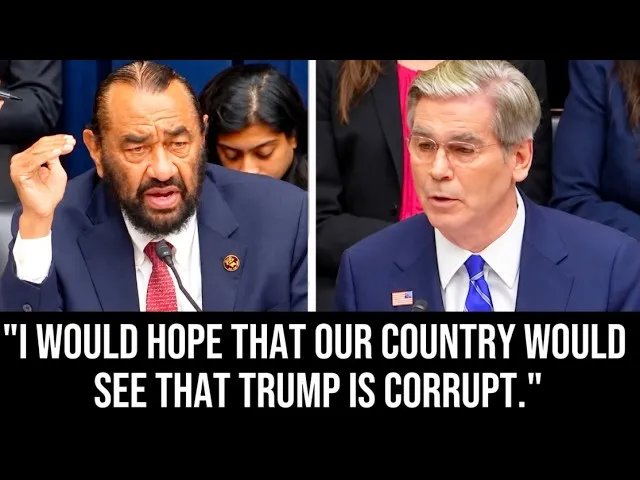
Video: WHOA: Al Green GRILLS Bessent over Trump's meme coin “scam”
You can order the same kind of articles for your own video to boost it on YouTube and Google. Just message the Telegram bot @sat_sit_bot. It writes articles around your video, embeds the video and publishes them on popular niche websites (no ads). Try it free: 50 articles on us.
· based on the channel Daniel Reed
Key takeaways
- Senator Al Green pressed Treasury Secretary Scott Bessent over a meme coin tied to Donald Trump, calling it a scam in a public hearing.
- Bessent responded with evasive, repetitive answers, which critics read as an unwillingness to address the conflict of interest directly.
- Meme coins have no cash flow, no equity and no claim on any asset; their price depends entirely on the next buyer paying more.
- Retail buyers who enter after a launch spike absorb the losses when insiders and early holders exit.
- A token issued by a sitting president raises unprecedented questions about disclosure, market manipulation and regulatory capture.
A meme coin is a cryptocurrency with no underlying business, cash flow or asset backing, whose value rests purely on community attention and the willingness of the next buyer to pay more. The Senate hearing in which Senator Al Green grilled Treasury Secretary Scott Bessent over a token tied to Donald Trump put that definition at the center of a national argument about conflict of interest, disclosure and who absorbs the losses when the attention fades.
What the Al Green exchange over Trump's meme coin revealed
The core of the confrontation was not the price chart but the principle: a sitting president's family launching a speculative token creates a conflict no ethics framework was built to handle. Green repeatedly characterized the arrangement as a scam, while Bessent answered in generalities about markets and regulation rather than addressing the specific token. The exchange is captured in the hearing footage, with the sharpest back-and-forth around the middle of the session 00:00.
What makes the episode notable is the asymmetry of information. Insiders know the issuance schedule, the wallet allocations and the timing of promotional pushes. Retail buyers see a ticker, a logo and a social media post. That gap is the structural reason meme coin launches so often end with a small group of early holders exiting into a large group of late entrants.
How a meme coin actually works under the hood
A meme coin is a smart contract that mints tokens and distributes them according to rules set at launch, and those rules usually favor the creators. Understanding the mechanics removes most of the mystique:
- Supply allocation. Creators typically reserve a large share for themselves, the team and "liquidity," often 20–80% of total supply depending on the launch.
- Liquidity pool. The token is paired with a stablecoin or SOL/ETH in a decentralized exchange pool; the pool depth determines how violently the price moves on relatively small trades.
- Unlock and vesting. Insider allocations frequently unlock on a schedule measured in weeks, not years, which creates predictable sell pressure.
- Narrative engine. Price depends on continuous promotion — posts, endorsements, influencer coverage — because there is no revenue to anchor valuation.
- Exit liquidity. The last buyers provide the exit for everyone earlier in the chain. This is the mechanical reason the structure resembles a greater-fool game rather than an investment.
Nothing in that list is illegal. It is simply a design where the distribution of outcomes is heavily skewed toward insiders, and where the token has no mechanism to generate value for holders over time.
Typical questions buyers ask about meme coin risk
The recurring doubts from traders and observers cluster around a few practical points. First, the difference between a Ponzi scheme and a pyramid scheme matters legally but not economically for the buyer: in both, earlier participants are paid by later participants' money. Second, the claim that meme coins are used for access or for moving money quietly is plausible in specific cases but is not what drives most retail volume — most of it is simply speculation on attention. Third, the "fool's gold" argument cuts both ways: buyers who understand the structure and trade it as a lottery ticket are making a choice, while buyers who mistake it for an investment are being misled by the format.
A useful test before buying any token: can you name who holds the largest wallets, when their tokens unlock, and what the liquidity pool depth is? If any of those three answers is unavailable, the position is not a trade, it is a donation.
Why the political dimension changes the risk profile
When a token is associated with a political figure, the risk is no longer only market risk, because the issuer's decisions can move policy, attention and enforcement simultaneously. That is the substance of the concern raised in the hearing: a Treasury Secretary being asked about a presidential family token is being asked, in effect, whether the referee owns a stake in the team 00:00. Bessent's unwillingness to engage with the specifics, rather than the token's price, is what turned the exchange into a viral moment.
For traders, this creates a category of asset that behaves like a prediction market on political attention, with the added hazard that regulatory clarity may arrive suddenly and adversely. Position sizing, not conviction, is the only real risk control here.
What retail losses look like in practice
The pattern is remarkably consistent across launches: a vertical spike on day one, a distribution phase where early wallets sell into the spike, then a long decay with occasional pumps on news. Buyers who entered during the spike rarely recover their cost basis, because the token has no earnings to justify a return to the old price. Secondary markets amplify this — listings of bulk token bundles at multiples of face value are a reliable sign that holders are trying to offload illiquid positions onto people who do not understand what they are buying.
The honest framing for anyone considering a meme coin: treat the entire amount as money already spent, and never borrow, never use funds earmarked for anything else, and never average down on a position whose only thesis is that someone louder will arrive later.
Conclusion
The hearing distilled a simple point: a meme coin is a speculation vehicle whose value depends on attention, and when the issuer is connected to political power, the information gap between insiders and retail buyers becomes a governance problem, not just a trading one. The mechanics — insider allocations, short unlock schedules, thin liquidity — explain why the outcomes are so lopsided. Daniel Reed's video breakdown of the exchange is a useful primer on how the political and financial threads connect, and it is worth watching alongside the primary hearing footage rather than in place of it.
Questions & answers
Is a meme coin the same thing as a Ponzi scheme?
Not legally. A Ponzi scheme involves an operator promising returns and paying old investors with new money. A meme coin has no promised return, but the economics are similar for late buyers: gains for early holders come from the money later participants put in, and the token generates no value of its own.
Why did Senator Al Green call Trump's meme coin a scam?
Green framed it as a scam because a token issued in connection with a sitting president concentrates insider information and promotional power in the hands of a few people while retail buyers carry the downside. The concern is about conflict of interest and disclosure as much as about price behavior.
How did Treasury Secretary Bessent respond to the questioning?
Bessent largely avoided addressing the specific token, answering with general statements about markets and regulation. Critics interpreted that as deflection, since the question was about a direct conflict of interest rather than about crypto policy in the abstract.
What should a retail buyer check before buying a meme coin?
Check the wallet distribution, the unlock schedule for insider allocations, and the depth of the liquidity pool. If those details are not public or not verifiable, the buyer has no way to assess how much sell pressure is waiting on the other side of the trade.
Source: WHOA: Al Green GRILLS Bessent over Trump's meme coin “scam” · Markdown version